
What is Chemical Loading?
What is Chemical Loading?
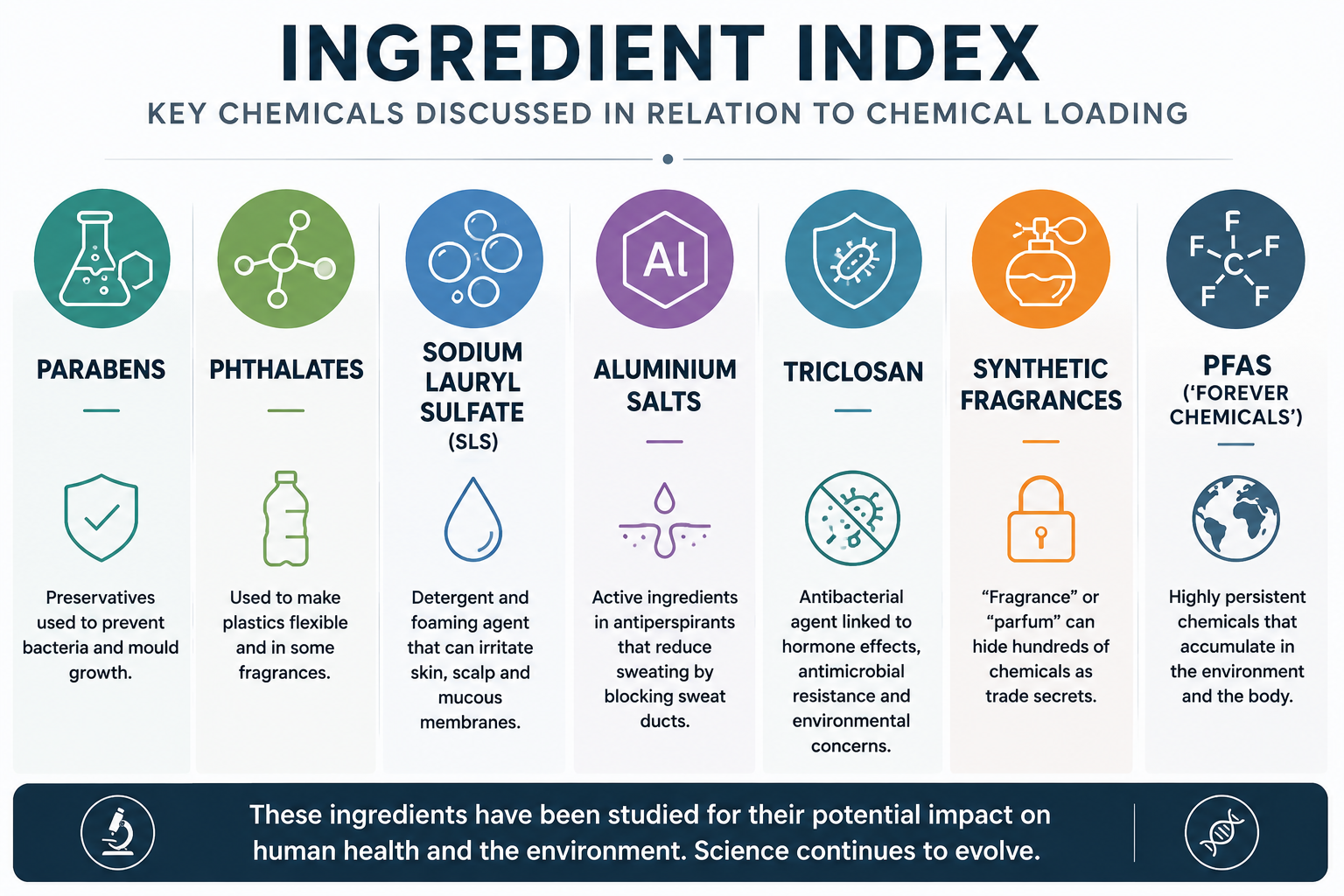
Chemical loading refers to the cumulative exposure to chemicals from multiple sources over time. While individual exposures may be small, they can add up throughout a lifetime.
Every day, most of us are exposed to hundreds of different chemicals.
We brush our teeth, wash our hair, apply deodorant, moisturise our skin, use cosmetics, clean our homes, eat food packaged in plastic and breathe the air around us. Some of these chemicals occur naturally, while others are synthetic substances developed for modern products.
Chemical loading is the term used to describe the total burden of chemical exposure we accumulate from all of these sources over time.
Rather than looking at a single ingredient in a single product, chemical loading considers the bigger picture: the combined effect of many small exposures, repeated day after day, year after year.
Understanding chemical loading can help us make more informed decisions about the products we choose and the environments we create around ourselves and our families.
Where Do These Chemicals Come From?
Chemical exposure is part of everyday life.
Many of the products and materials we encounter throughout the day contain ingredients designed to clean, preserve, fragrance, colour, protect or improve performance.
Common sources of chemical exposure include:
Personal care products
Cosmetics and fragrances
Household cleaning products
Food packaging
Air pollution
Drinking water
Furniture and furnishings
Pesticides and agricultural chemicals
Workplace environments
Most of these exposures occur at relatively low levels. Chemical loading recognises that we are exposed to many different substances from many different sources throughout our lives, not just one ingredient at a time.
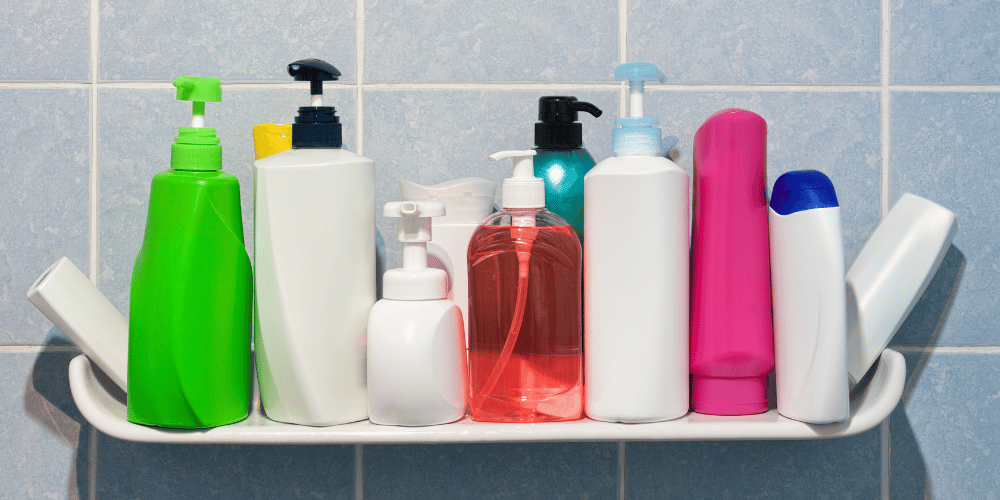
A Typical Morning
Consider a fairly ordinary morning.
Before leaving the house, many people will have brushed their teeth, showered, washed their hair, applied deodorant and perhaps used skincare, makeup or fragrance.
Each product may contain numerous ingredients. While individual products are assessed for safety, chemical loading encourages us to consider the combined exposure from all the products we use throughout the day.
Why Does Chemical Loading Matter?
Many ingredients used in cosmetics and personal care products have undergone safety assessments and are permitted for use within regulated limits.
However, most safety testing focuses on individual ingredients.
Real life is far more complex.
We are exposed to multiple chemicals from multiple sources simultaneously, often over many decades. Researchers continue to investigate how these combined exposures may interact within the body and whether long-term cumulative exposure could have different effects than exposure to a single ingredient in isolation.
This challenge is sometimes referred to as the "cocktail effect", where multiple exposures may interact in ways that are difficult to predict.
While there is still much to learn, growing numbers of scientists, health organisations and consumers are interested in understanding the potential impact of lifelong chemical exposure.
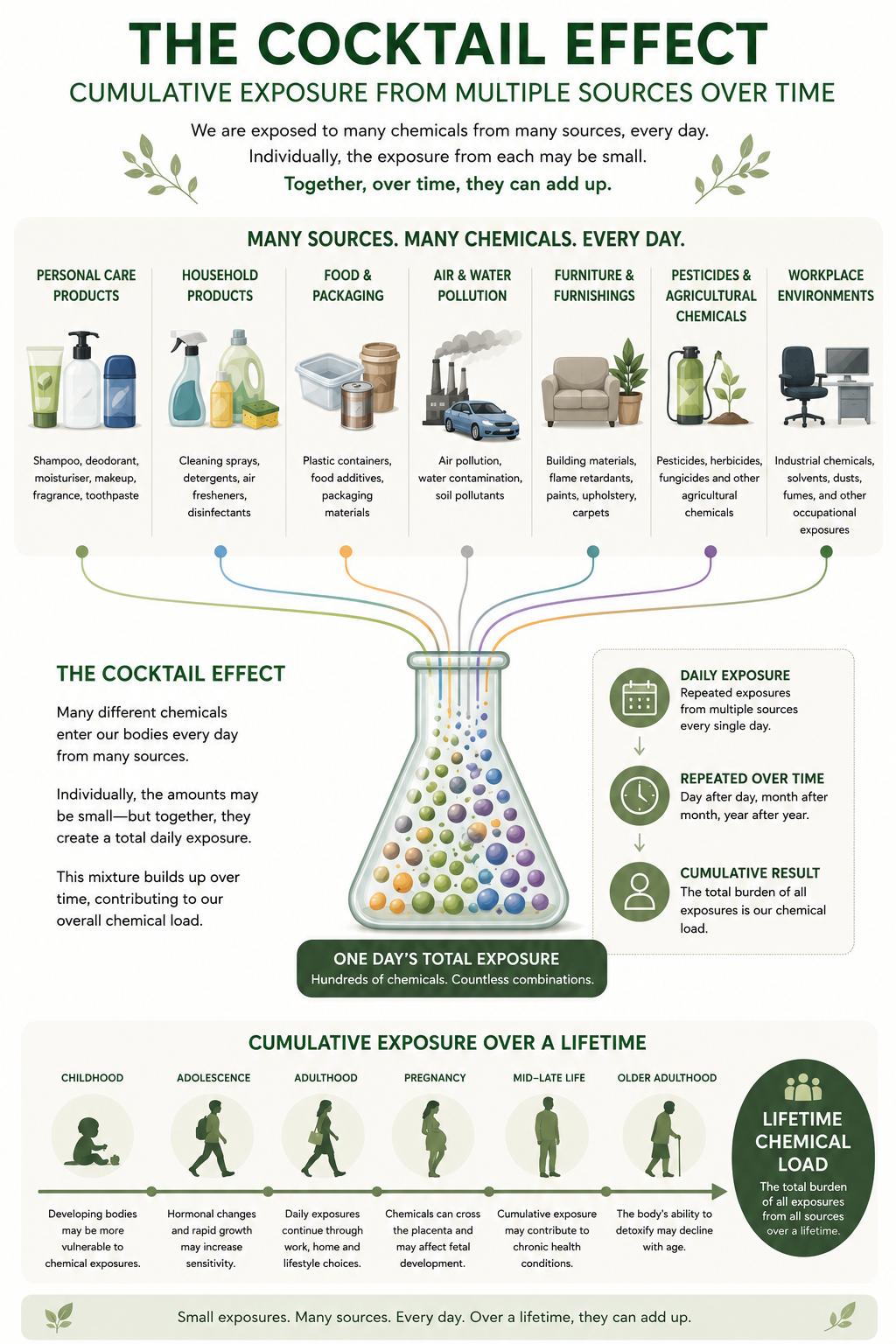
Ingredients Commonly Discussed In Relation To Chemical Loading
Not all synthetic ingredients raise concerns. Many have important functions and are considered safe within current regulatory limits.
However, some ingredients have attracted scientific attention because of their potential impact on human health or the environment.
Endocrine Disruptors
Certain chemicals have been studied for their ability to interfere with the body's hormonal systems. These are known as endocrine-disrupting chemicals (EDCs).
Examples often discussed include some phthalates and parabens.
Hormones regulate many essential functions including growth, development, fertility, metabolism and mood. As a result, researchers continue to investigate how long-term exposure to endocrine-disrupting chemicals may affect human health.
Parabens
Parabens are preservatives used to prevent the growth of bacteria and mould in cosmetics and personal care products.
Some parabens have been found to mimic oestrogen in laboratory studies, leading to ongoing scientific discussion about their potential role as endocrine disruptors.
Phthalates
Phthalates are commonly used to make plastics more flexible and can also be found in some fragrances and personal care products.
Certain phthalates have been linked to hormone disruption, which is why they continue to be the subject of scientific research and regulatory review.
Sodium Lauryl Sulfate (SLS)
SLS is a detergent and foaming agent commonly found in toothpaste, shampoos and cleansing products.
It is effective at creating foam and removing oils, but some people find it can be irritating to the skin, mouth or scalp, particularly with frequent use.
Aluminium Salts
Aluminium salts are the active ingredients used in most antiperspirants. They work by forming temporary plugs within sweat ducts, helping to reduce perspiration.
They are often discussed in relation to chemical loading because they are applied regularly to the underarm area, sometimes over many decades. Questions have been raised about skin absorption and potential long-term health effects, although scientific debate continues and regulatory bodies currently consider approved aluminium salts safe for use within established limits.
Many consumers choose aluminium-free deodorants as a precautionary measure or simply because they prefer products that work with the body's natural sweating process rather than blocking it.
Triclosan
Triclosan was once widely used in antibacterial soaps, toothpastes and personal care products.
Concerns about its environmental impact, contribution to antimicrobial resistance and potential effects on hormone systems have led to restrictions and bans in several countries.
Synthetic Fragrances
The word "fragrance" or "parfum" on an ingredient label can represent a blend of many individual ingredients.
Because fragrance formulations are often protected as trade secrets, consumers are not always able to see every component that makes up a fragrance blend.
PFAS
PFAS, often referred to as "forever chemicals", are a group of highly persistent chemicals used in a wide range of consumer products.
Their resistance to breakdown has raised concerns about environmental accumulation and long-term exposure.
Chemical Loading And Personal Care Products
At The Green Woman, we are particularly interested in personal care products because they are products we actively choose and apply directly to our bodies every day.
Unlike air pollution or wider environmental exposures, personal care products are an area where consumers can make informed choices about the ingredients they use and the products they bring into their homes.
Organisations including Breast Cancer UK have highlighted that women may be exposed to a large number of synthetic chemicals each day through cosmetics and personal care products alone.
For many people, understanding chemical loading begins with taking a closer look at ingredient labels and asking simple questions about what ingredients are present, what purpose they serve and whether alternatives are available.
Can We Avoid Chemical Exposure Completely?
No.
Many chemicals occur naturally in food, plants and the environment. Exposure to chemicals is a normal part of life.
The goal of understanding chemical loading is not to eliminate every chemical from our lives.
Instead, it is about awareness.
By understanding where our exposures come from, we can make informed choices about which products we use and which ingredients we are comfortable having in our daily routines.
How Can You Reduce Your Chemical Load?
Many people choose to reduce their overall chemical exposure through simple lifestyle changes.
These may include:
Reading ingredient labels more carefully
Avoiding unnecessary synthetic fragrances
Choosing products with simpler formulations
Selecting products from companies that provide ingredient transparency
Reducing exposure to unnecessary household chemicals where practical
Small changes, repeated consistently, can significantly reduce the number of synthetic chemicals we encounter every day.
The Green Woman View
At The Green Woman, we believe people deserve clear information about the products they use every day.
Understanding chemical loading helps us look beyond individual ingredients and consider the wider picture of cumulative exposure over a lifetime.
As scientific understanding continues to evolve, many people are choosing products with simpler formulations, greater transparency and carefully selected ingredients.
Knowledge allows us to ask better questions, understand ingredients more clearly and make informed choices about the products we use every day.
Explore. Learn. Make Informed Choices.
Looking For Alternatives?
If you're reviewing the ingredients in your everyday products, you may also be interested in exploring certified organic alternatives.
At The Green Woman, we create certified organic personal care products designed with simplicity, transparency and carefully selected ingredients in mind.
Popular Alternatives
Further Reading
If you'd like to learn more about ingredients commonly discussed in relation to chemical loading, you may also find these articles helpful:
These articles explore the science, regulations and practical considerations behind some of the most common ingredients found in everyday personal care products.