What is Triclosan?
What Is Triclosan?
Triclosan is a synthetic antibacterial and antifungal ingredient that was widely used in personal care products for several decades.
Originally introduced in the 1970s, triclosan became a popular ingredient in products marketed as "antibacterial" because of its ability to inhibit the growth of certain bacteria.
Over time, however, concerns emerged about its potential effects on human health, antibiotic resistance and the environment.
In 2016, the US Food and Drug Administration (FDA) banned triclosan from over-the-counter antibacterial hand and body washes after concluding that manufacturers had not demonstrated that it was more effective than plain soap and water or safe for long-term daily use. Similar regulatory restrictions have been introduced across Europe, and many manufacturers have voluntarily removed triclosan from their products.
Today, triclosan is far less common than it once was, although it may still be found in some products and materials depending on the country and product category.
Why Was Triclosan Used?
Triclosan was developed because of its antibacterial and antifungal properties.
For many years, manufacturers added triclosan to products with the aim of reducing bacterial growth, controlling odours and helping products maintain a perception of cleanliness and hygiene.
During the 1980s, 1990s and early 2000s, antibacterial products became increasingly popular, leading to triclosan being incorporated into a wide range of consumer goods.
At the time, triclosan was widely regarded as an effective ingredient. However, as scientific understanding evolved, questions began to emerge about whether the benefits outweighed the potential risks associated with long-term and widespread use.
Where Is Triclosan Found?
Although triclosan is less common than it once was, it can still be found in some products and materials.
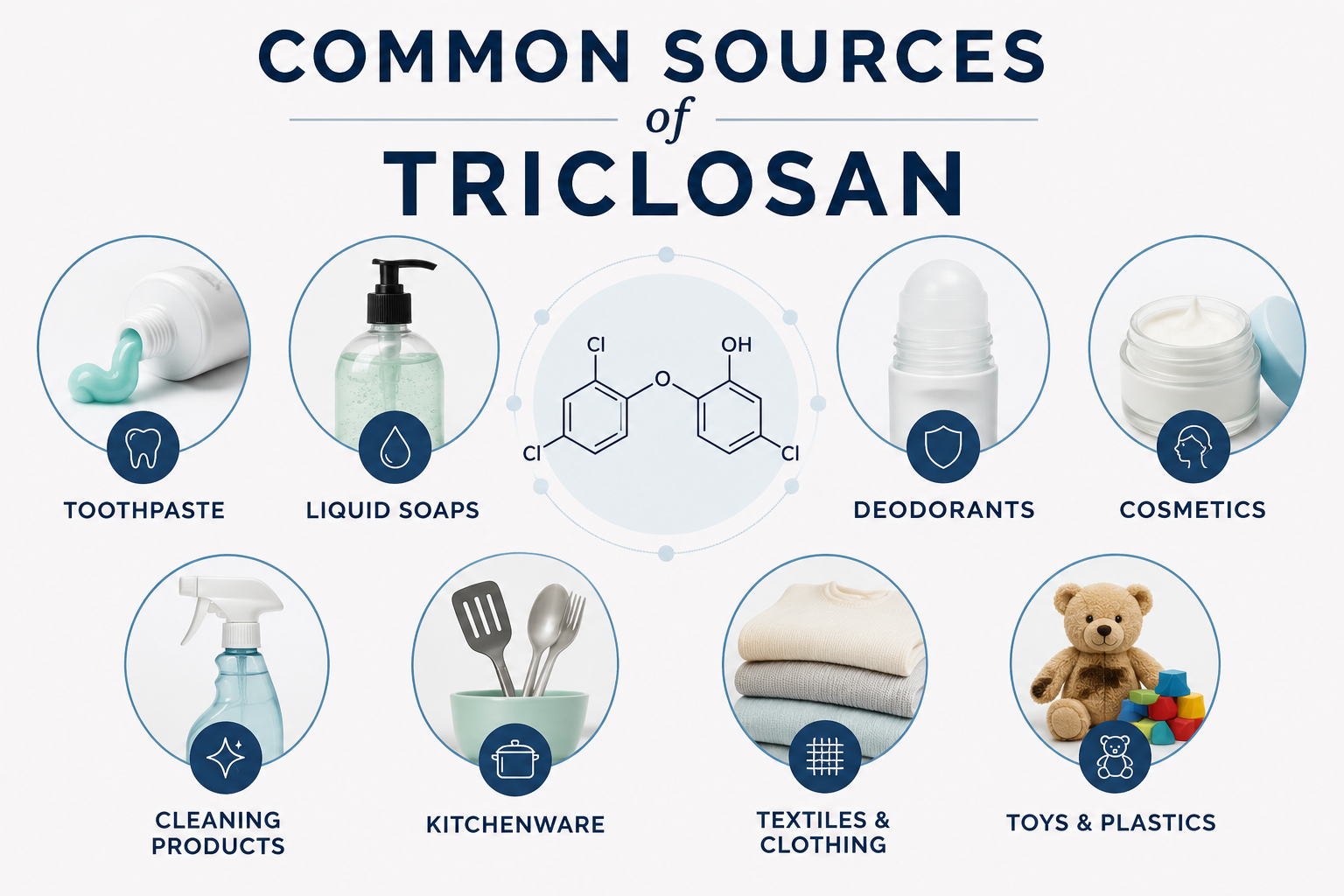
Historically, triclosan has been used in:
Liquid hand soaps
Cosmetics
Cleaning products
Kitchenware
Textiles and clothing
Toys
Plastic household items
Because triclosan may be present in products outside the personal care industry, it is not always easy for consumers to identify every potential source of exposure.
Is Triclosan Still Used In The UK?
Yes, although much less than in the past.
Triclosan has been removed from many everyday consumer products, particularly antibacterial soaps and washes. Regulatory restrictions in the UK and Europe have reduced its use, and many manufacturers have chosen to reformulate products without it.
However, triclosan may still appear in some imported products, specialist items and certain personal care products, which is why reading ingredient labels remains important.
If triclosan is present in a cosmetic product, it must be declared on the ingredient list.
Why Are Some People Concerned About Triclosan?
Over the past two decades, triclosan has become the subject of increasing scientific research.
Concerns have generally focused on three areas:
Antibiotic resistance
Endocrine disruption
Environmental impact
Triclosan And Antibiotic Resistance
Scientists have investigated whether the widespread use of antibacterial chemicals such as triclosan could contribute to the development of antibiotic-resistant bacteria.
Antibiotic resistance is recognised as one of the most significant public health challenges facing the world today. Some researchers have questioned whether the routine use of antibacterial ingredients in everyday consumer products provides meaningful benefits compared with regular soap and water.
Triclosan And Hormone Health
Research has shown that triclosan may interact with hormonal systems in laboratory and animal studies.
Because of this, triclosan is often discussed as a potential endocrine-disrupting chemical (EDC). Researchers have explored possible effects on thyroid hormones, reproductive health and other hormone-regulated processes.
While scientific understanding continues to evolve, triclosan remains one of the ingredients most frequently cited in discussions around endocrine disruption and chemical loading.
Triclosan And Breast Cancer Research
Triclosan has also attracted attention because of its potential effects on hormone signalling.
Organisations such as Breast Cancer UK identify triclosan as one of several chemicals of concern that consumers may wish to avoid where practical. This is because endocrine-disrupting chemicals are being studied for their potential role in hormone-related diseases, including breast cancer.
Breast Cancer UK supports further research into environmental exposures and encourages a precautionary approach to reducing unnecessary chemical exposure where practical.
It is important to note that breast cancer is a complex disease influenced by many factors, including genetics, age, lifestyle, hormones and environmental exposures. Research into the role of endocrine-disrupting chemicals remains ongoing.
Triclosan And Bone Health
Some studies have investigated possible links between triclosan exposure and reduced bone mineral density, particularly in women. Research in this area is still developing, and more evidence is needed to fully understand any potential relationship.
Triclosan And Oral Health
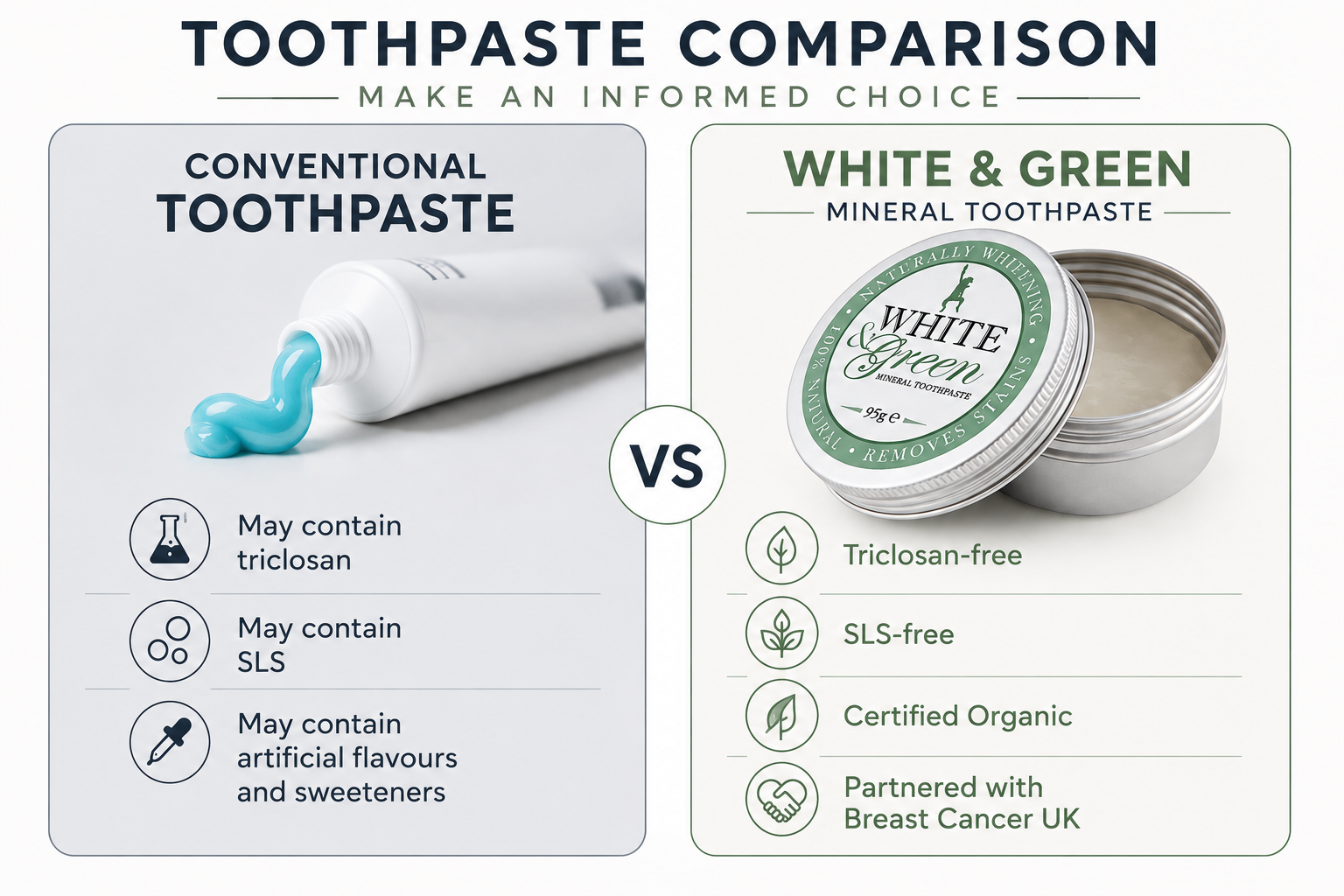
Triclosan was previously used in some toothpastes because of its antibacterial properties.
While some studies suggested it may help reduce plaque and gingivitis, concerns have also been raised about long-term exposure through products used daily inside the mouth.
This is one reason many people choose to switch to triclosan-free toothpaste alternatives.
At The Green Woman, our White & Green Mineral Toothpaste is formulated without triclosan and is certified organic. It was developed in partnership with Breast Cancer UK as part of a wider commitment to ingredient transparency and informed consumer choice.
 Triclosan And The Environment
One of the most significant concerns surrounding triclosan relates to its environmental impact.
When products containing triclosan are washed down sinks and drains, the chemical can enter rivers, lakes and coastal waters.
Research has shown that triclosan can persist in aquatic environments and may affect algae and other organisms that form part of the food chain.
For this reason, environmental organisations have called for reduced use of triclosan in consumer products.
Triclosan And Chemical Loading
Triclosan is frequently discussed in relation to chemical loading.
Although exposure from a single product may be relatively small, repeated exposure from multiple products over many years can contribute to overall chemical exposure.
This is one reason many consumers choose to review the ingredients in the products they use every day and make informed choices about what they bring into their homes.
How Can You Avoid Triclosan?
If you wish to reduce your exposure to triclosan, start by checking ingredient labels carefully.
If triclosan is present in a cosmetic or personal care product, it should appear on the ingredient list.
Many brands now specifically market products as triclosan-free, making them easier to identify.
When choosing toothpaste, deodorants and other personal care products, consider looking for brands that are transparent about their ingredients and avoid unnecessary antibacterial chemicals.
Looking For Alternatives?
Many people choose to reduce their exposure to triclosan by selecting simpler products with transparent ingredient lists.
At The Green Woman, we formulate our products without triclosan and other ingredients commonly discussed in relation to chemical loading.
If you're looking for alternatives, you may wish to explore:
Our certified organic products are designed around ingredient transparency and carefully selected natural ingredients.
Small changes to the products you use every day can help reduce your overall chemical load over time.
Further reading
You may also find these articles helpful:
Explore. Learn. Make Informed Choices.
First posted 15/08/2022. Updated June 2026: This article has been reviewed and updated to reflect current research, regulations and ingredient information.