
What are Endocrine Disruptors?

What Are Endocrine Disruptors?
Endocrine disruptors are chemicals that may interfere with the body's hormonal systems.
Hormones act as the body's chemical messengers, helping to regulate growth, development, metabolism, reproduction, mood, sleep and many other essential functions.
Because hormones operate at extremely low levels within the body, some scientists have raised concerns that certain chemicals may be capable of affecting these systems, even at relatively low levels of exposure.
These substances are known as endocrine-disrupting chemicals, often shortened to EDCs.
As research in this area continues to develop, endocrine disruptors have become one of the most widely discussed topics in environmental health and chemical safety.
What Is The Endocrine System?
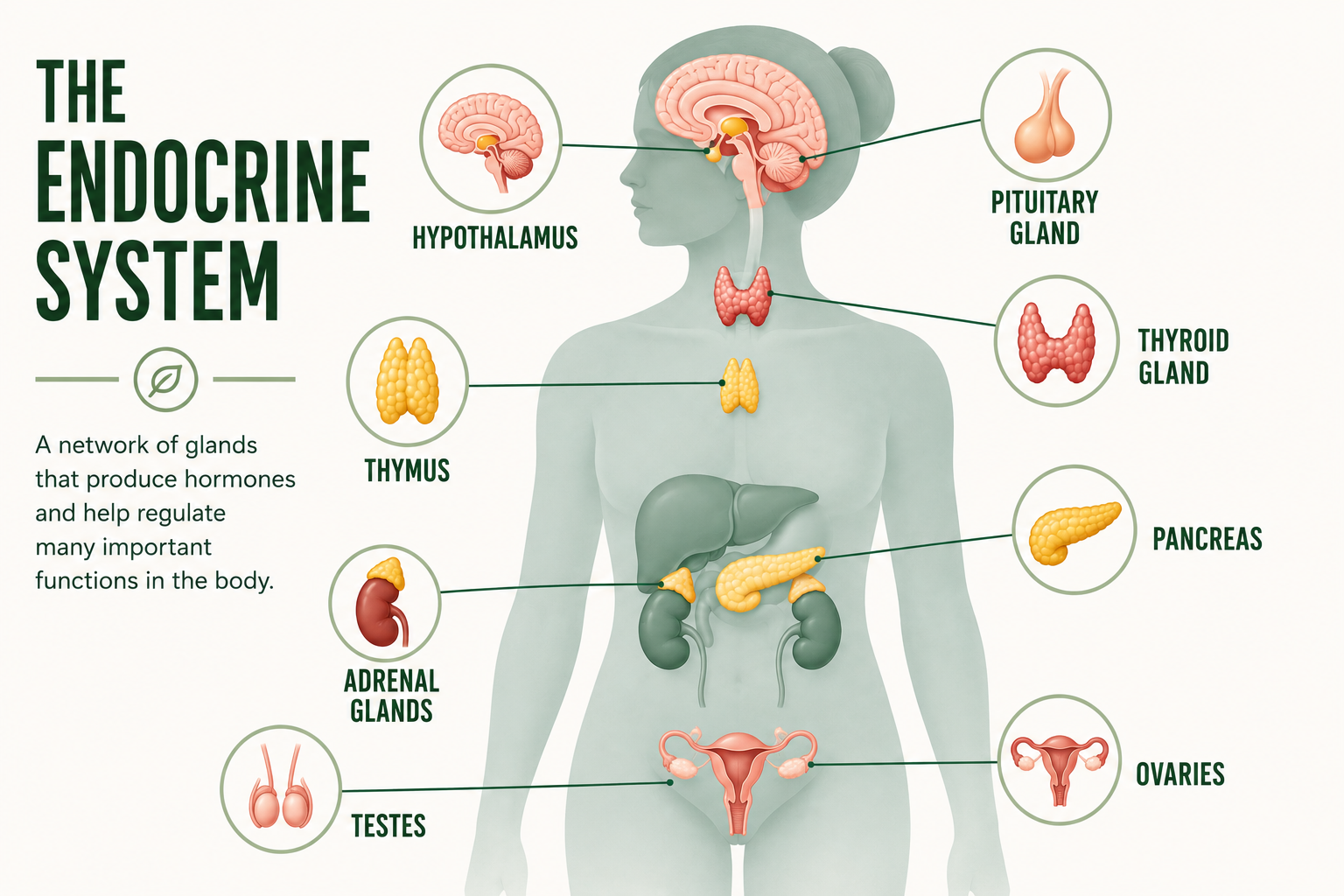
The endocrine system is a network of glands and organs that produce hormones.
Key parts of the endocrine system include:
- The brain
- The thyroid gland
- The adrenal glands
- The pancreas
- The ovaries
- The testes
Together, these organs help regulate many of the body's most important functions.
When hormones are released, they travel through the bloodstream and deliver messages to different tissues and organs. This process helps maintain the body's natural balance.
Why Are Scientists Interested In Endocrine Disruptors?
Scientists have known for many years that hormones play a critical role in human development and health.
Research has shown that some chemicals can mimic, block or interfere with natural hormones in laboratory studies and animal models.
Because of this, researchers are investigating whether long-term exposure to certain endocrine-disrupting chemicals may contribute to health concerns in humans.
Areas of ongoing research include:
- Fertility and reproductive health
- Child development
- Early puberty
- Metabolic health
- Thyroid function
- Hormone-related cancers
While many questions remain, endocrine disruption is now recognised as an important area of scientific study.
Endocrine Disruptors And Breast Cancer
One of the reasons endocrine-disrupting chemicals have attracted significant attention is their potential relationship with hormone-related cancers, including breast cancer.
Some endocrine disruptors can mimic or interfere with the body's natural hormones, particularly oestrogen. Because oestrogen plays an important role in the development and growth of some breast cancers, researchers have investigated whether long-term exposure to certain endocrine-disrupting chemicals could influence breast cancer risk.
While the science continues to evolve, organisations such as Breast Cancer UK have highlighted concerns about cumulative exposure to endocrine-disrupting chemicals and support efforts to reduce unnecessary exposure where practical.
Breast Cancer UK has identified a number of chemicals that may act as endocrine disruptors, including certain parabens, phthalates, PFAS compounds and bisphenols.
It is important to note that exposure to a particular chemical does not mean that someone will develop breast cancer. Breast cancer is a complex disease influenced by many factors, including genetics, age, lifestyle, hormones and environmental exposures.
However, many researchers believe that reducing avoidable exposure to potential endocrine disruptors is a sensible precautionary approach while scientific understanding continues to develop.

Common Endocrine Disruptors
A number of chemicals have been studied for their potential endocrine-disrupting properties.
Parabens
Parabens are preservatives used in cosmetics and personal care products.
Some parabens have been shown to mimic oestrogen in laboratory studies, which is why they are often discussed in relation to endocrine disruption.
Phthalates
Phthalates are commonly used in plastics and can also be found in some fragrance formulations.
Certain phthalates have been linked to hormone disruption and continue to be the subject of scientific and regulatory review.
Bisphenols
Bisphenol A (BPA) and related compounds are used in some plastics and food packaging materials.
They have been widely studied because of their ability to interact with hormone receptors.
PFAS
PFAS, sometimes called "forever chemicals", are a large group of highly persistent chemicals used in many consumer products.
Some PFAS compounds have raised concerns due to their potential effects on hormonal and metabolic systems.
Triclosan
Triclosan is an antibacterial ingredient that was previously used in a range of personal care products.
Studies have explored its potential effects on thyroid hormones and other endocrine pathways.
Certain Pesticides
Some agricultural chemicals have also been studied for their potential to interfere with hormone systems.
As a result, endocrine disruption is not only a personal care issue but also an environmental one.
Where Do Endocrine Disruptors Come From?
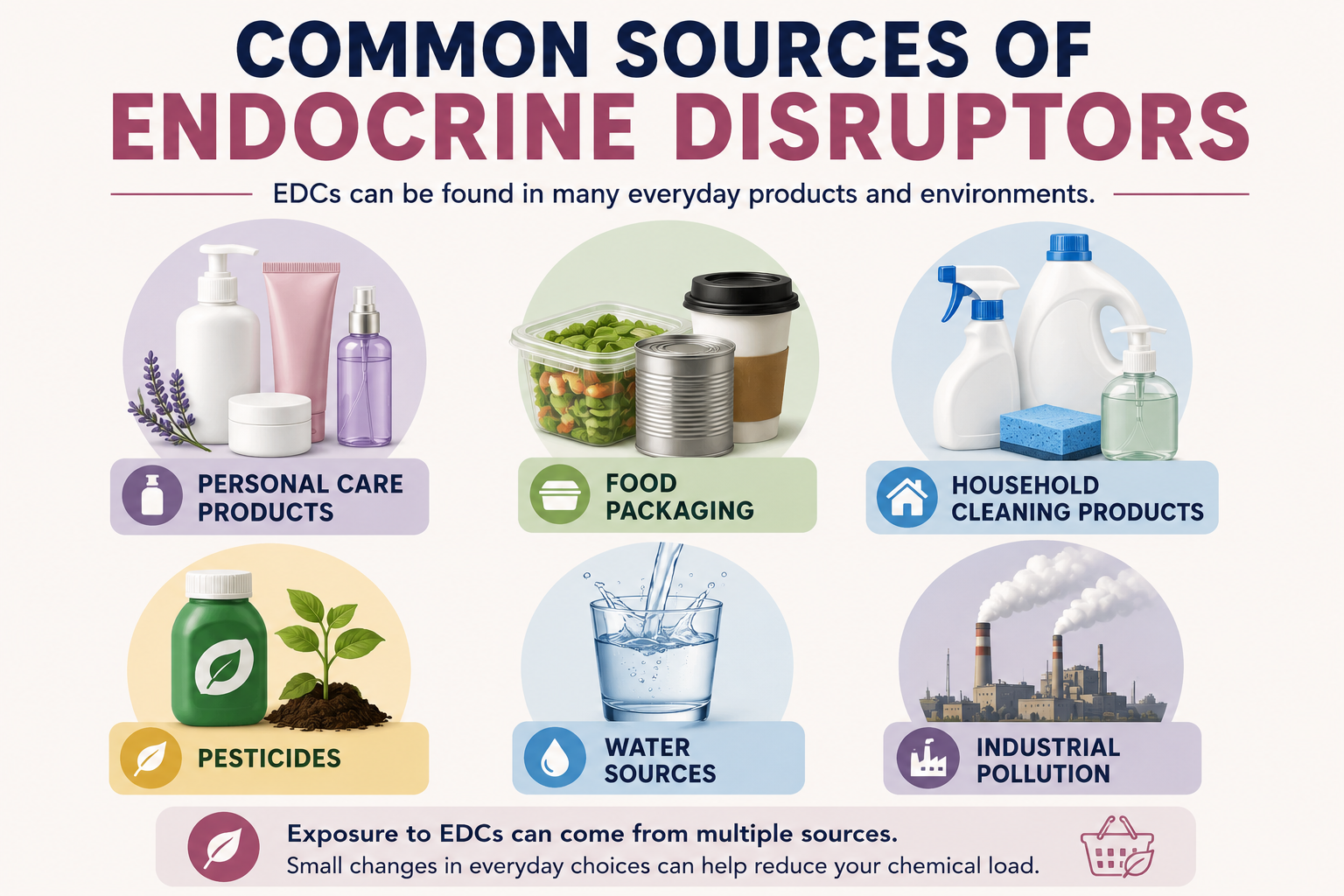
Potential endocrine-disrupting chemicals can be found in many aspects of modern life, including:
- Cosmetics and personal care products
- Plastic packaging
- Household cleaning products
- Food contact materials
- Pesticides
- Industrial pollution
- Water sources
- Consumer goods and furnishings
Most people are exposed to multiple sources throughout their lives.
This is one reason endocrine disruptors are often discussed alongside the concept of chemical loading.
Endocrine Disruptors And Chemical Loading
When discussing endocrine disruptors, researchers are often interested in cumulative exposure.
Rather than looking at a single product or ingredient, chemical loading considers the combined exposure to many substances over time.
For example, a person may be exposed to endocrine-disrupting chemicals through personal care products, food packaging, household products and environmental sources throughout the course of a single day.
Scientists continue to investigate how these combined exposures may affect long-term health.
What does the research say?
Research into endocrine disruption is a rapidly evolving field.
Some chemicals have demonstrated endocrine-disrupting effects in laboratory studies and animal models, while researchers continue to investigate the significance of these findings for human health.
Organisations such as Breast Cancer UK have highlighted concerns around endocrine-disrupting chemicals and support efforts to reduce unnecessary exposure where practical.
At the same time, regulatory agencies continue to assess available evidence and set limits or restrictions where appropriate.
As with many areas of environmental health, scientific understanding continues to evolve.
Can You Avoid Endocrine Disruptors Completely?
Probably not.
Many potential endocrine-disrupting chemicals are now widespread in the modern environment.
The goal is not necessarily to eliminate every possible exposure, but to understand where exposures come from and make informed choices where practical.
For many people, personal care products are one of the easiest places to start because they are products we actively choose and use every day.
Looking For Alternatives?
At The Green Woman, we formulate our products without parabens, phthalates, triclosan and other ingredients commonly discussed in relation to endocrine disruption.
If you're looking to reduce your overall chemical load, you may wish to start with some of the products you use every day:
Our certified organic products are designed around ingredient transparency, carefully selected natural ingredients and recognised organic standards.
Small changes to the products you use every day can help reduce your overall chemical load over time.
Further Reading
You may also find these articles helpful:
Explore. Learn. Make Informed Choices.