Nano vs Non-Nano Ingredients: Why Size Matters
Nano vs Non-Nano Ingredients: Why Size Matters
Have you ever spotted the words non-nano zinc oxide on a mineral sunscreen and wondered what they actually mean?
Nanotechnology is becoming increasingly common in cosmetics, from sunscreens and moisturisers to make-up and toothpaste. By making ingredients incredibly small, manufacturers can change how they behave, often improving the texture, appearance or performance of a product.
Supporters see nanotechnology as an exciting scientific advance. Others believe it raises important questions about long-term health and environmental impacts.
At The Green Woman, we believe consumers deserve clear information, not confusing marketing. Here's what you need to know.
What does "nano" mean?
The word nano refers to size.
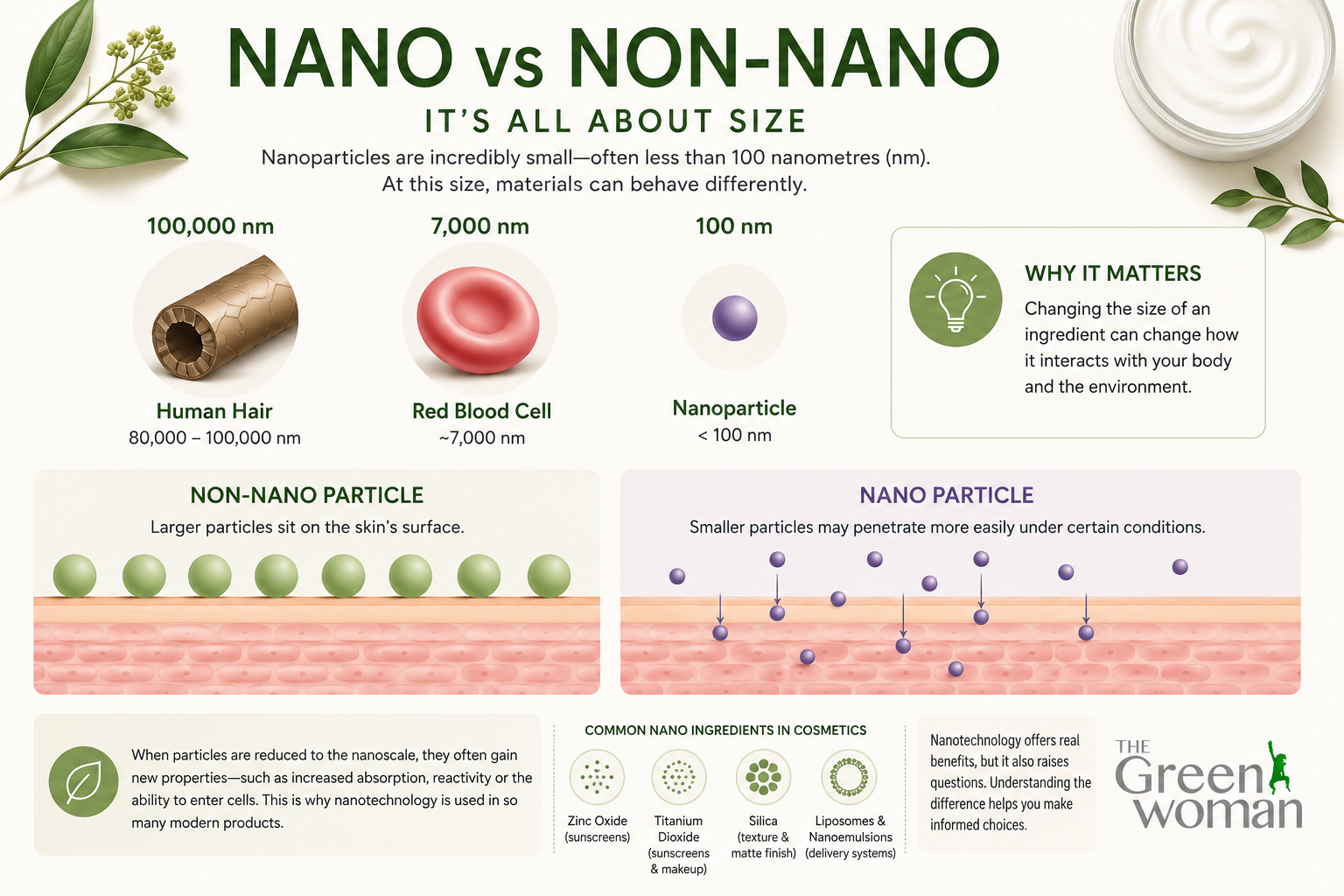
A nanometre (nm) is one billionth of a metre. To put that into perspective, a human hair is around 80,000 to 100,000 nanometres wide.
In many industries, materials are considered nanoparticles when they measure less than 100 nanometres.
Although the ingredient itself may not have changed, reducing it to this scale can alter its physical and chemical properties. It may become more reactive, more transparent or behave differently when it comes into contact with living tissue.
This ability to change how materials behave is exactly why nanotechnology has become so popular.
Why are nanoparticles used?
Nanotechnology isn't simply about making products smaller. It's about changing how they work.
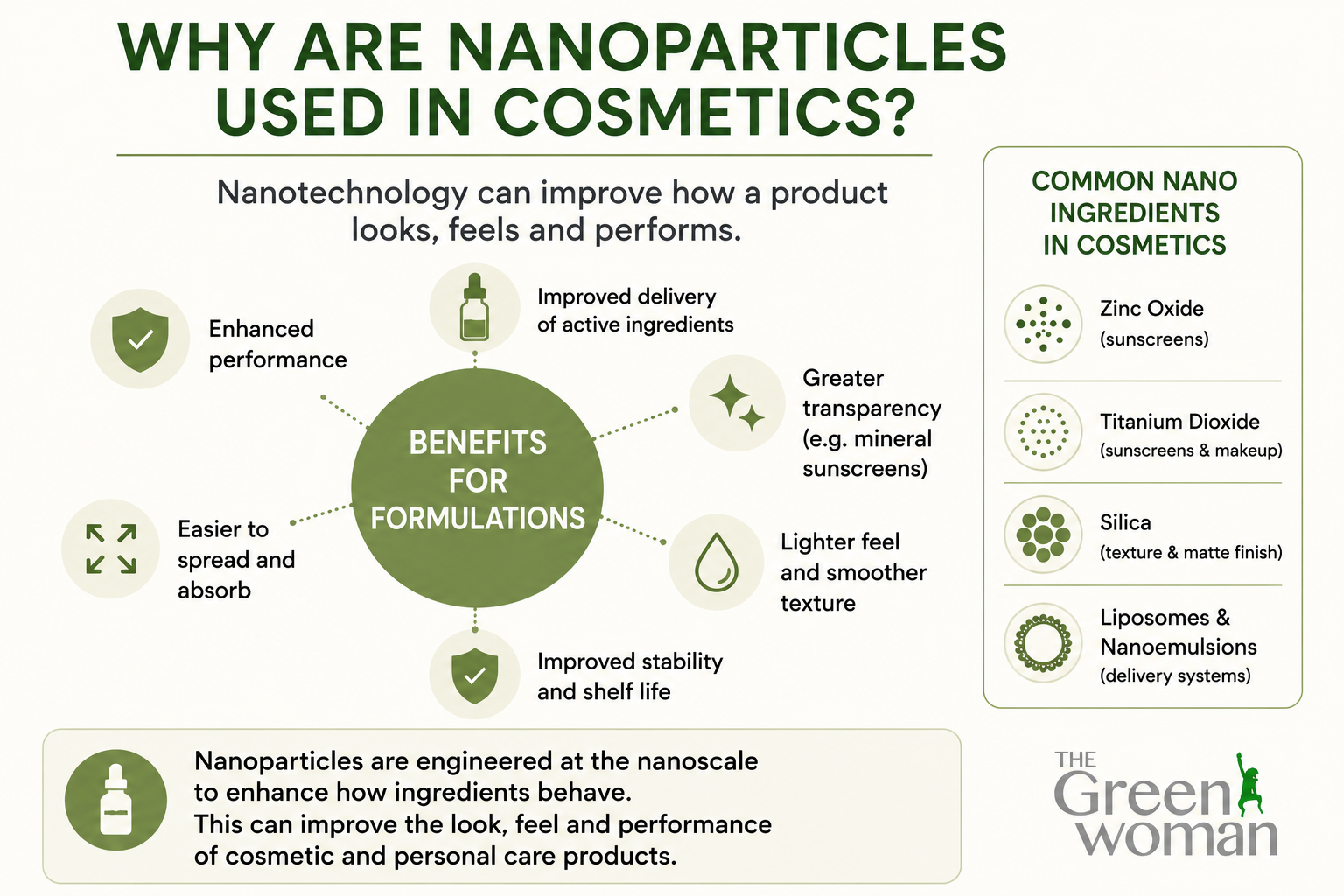
In cosmetics, nanoparticles can:
make creams feel lighter
reduce the white appearance of mineral sunscreens
improve the stability of ingredients
increase the delivery of active ingredients
help products spread more easily
In medicine, similar technology is being developed for a very different reason: to deliver drugs into specific tissues and even individual cells.
The very reason nanotechnology exists is because reducing materials to an extremely small size can change how they interact with biological systems. While this has exciting applications in medicine, it also raises reasonable questions about whether the same technology is always necessary in everyday personal care products.
Where are nanoparticles found?
Nanotechnology is no longer limited to specialist medical research.
It can now be found in a wide range of everyday products, including:
sunscreens
moisturisers
anti-ageing skincare
make-up
toothpaste
shampoos
medicines
food packaging
textiles
sports clothing
Some ingredients, such as liposomes and nanoemulsions, are specifically designed to improve the delivery of active ingredients into the skin.
Others, such as nano zinc oxide and nano titanium dioxide, are used to make mineral sunscreens appear almost invisible after application.
Can nanoparticles enter the body through skin?
This is one of the biggest questions surrounding nanotechnology.
Because nanoparticles are so small, scientists are investigating whether some can cross biological barriers that larger particles cannot.
Depending on the type of nanoparticle and how it is used, research has explored whether they may:
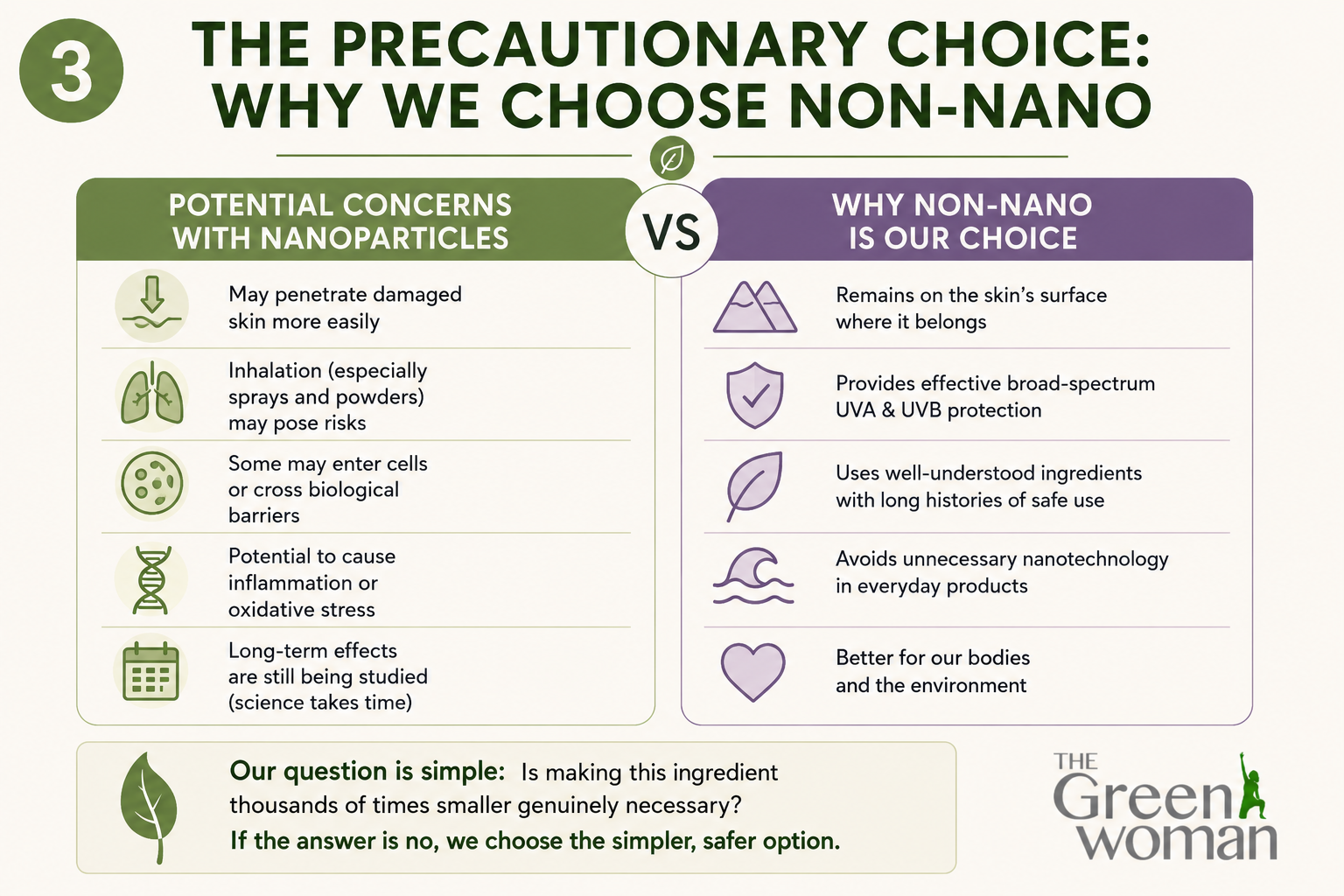
penetrate damaged skin
be absorbed after inhalation
cross the gut lining after swallowing
enter individual cells
interact with DNA or other cellular structures
trigger inflammation or oxidative stress
Not all nanoparticles behave in the same way. Their behaviour depends on their size, shape, surface coating, chemical composition and how they enter the body.
This is why scientists study different nanomaterials individually rather than treating them all as the same.
Are nano ingredients safe?
There is no simple yes or no answer.
Many nano ingredients currently approved for cosmetic use have been assessed by regulators and are considered safe within their intended conditions of use.
However, scientific understanding continues to evolve.
One of the biggest challenges with emerging technologies is that long-term studies take time. It can take many years, sometimes decades, before researchers fully understand how repeated, everyday exposure affects human health or the environment.
History reminds us that this isn't unusual.
Ingredients such as asbestos, lead in petrol, triclosan and certain PFAS chemicals were all widely used before enough evidence accumulated to understand their long-term impacts.
That doesn't mean nanoparticles will follow the same path.
But it does remind us that absence of evidence is not the same as evidence of absence. Simply because something hasn't been proven harmful doesn't necessarily mean every question has been answered.
What about mineral sunscreens?
Mineral sunscreens use zinc oxide or titanium dioxide to protect the skin from ultraviolet radiation.
Traditional mineral sunscreens can leave a visible white layer on the skin. One way manufacturers reduce this whitening effect is by reducing the mineral particles to nano size.
Nano mineral sunscreens generally look more transparent and feel lighter on the skin.
Non-nano mineral sunscreens, by comparison, use larger particles that remain on the skin's surface, forming a protective mineral barrier against UV radiation while avoiding the need to engineer the minerals to an extremely small size.
For many consumers, this offers an effective alternative without introducing nanotechnology into their daily skincare routine.
The Green Woman's Precautionary Approach
At The Green Woman, we don't believe every new technology should automatically be rejected, but neither do we believe every innovation should automatically be embraced.
Our philosophy is based on the precautionary principle. If there is genuine scientific uncertainty, and an effective, well-understood alternative already exists, we believe choosing the simpler option is often the wiser choice.
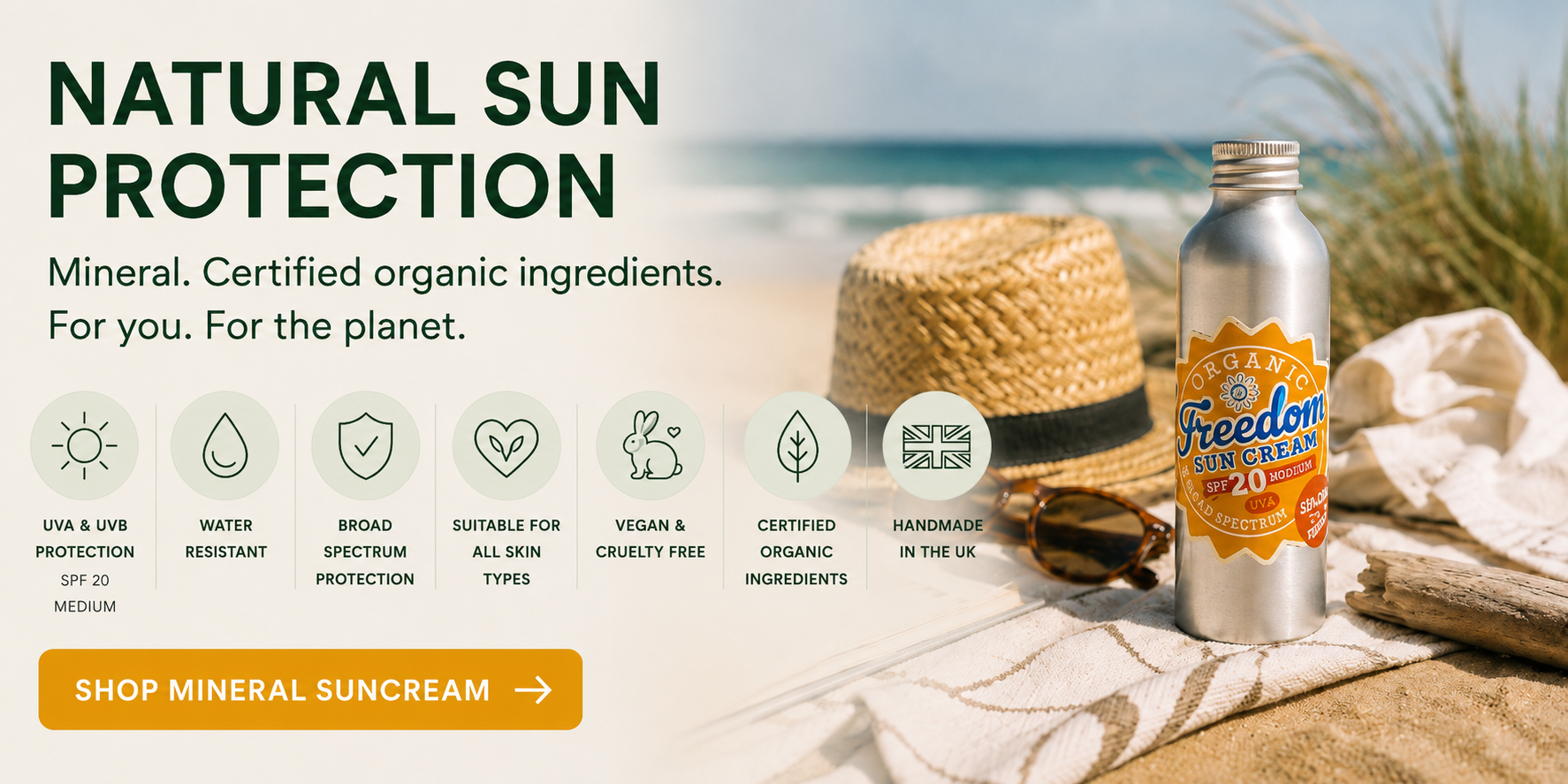
That's why our Freedom Mineral Suncream is made with non-nano zinc oxide. It provides broad-spectrum UVA and UVB protection without relying on nanoparticles or synthetic UV filters, while staying true to our commitment to simple, carefully chosen ingredients.
Our approach isn't based on fear. It's based on evidence, transparency and the understanding that science continues to evolve. We don't believe consumers should have to wait decades for definitive answers before making informed choices.
Instead, we ask one simple question:
Is making this ingredient thousands of times smaller genuinely necessary?
If the answer is no, we'd rather choose ingredients with long histories of safe use that work beautifully without adding unnecessary complexity.
Looking for a non-nano suncream alternative?
If you'd like to avoid nanoparticles in your sunscreen, our Freedom Mineral Suncream SPF20 combines non-nano zinc oxide with certified organic plant oils to provide effective broad-spectrum protection while staying true to our precautionary approach to formulation.