
Mineral vs Synthetic Sun Cream: Which Should You Choose?
Mineral vs Synthetic Sun Cream: Which Should You Choose?
Most sun creams found on supermarket shelves today use synthetic UV filters. In fact, many people don't realise there is another option.
Mineral sun creams use naturally occurring mineral filters instead of synthetic UV filters. They have been used for decades, provide effective protection against both UVA and UVB rays, and are becoming increasingly popular with people looking for a simpler, more precautionary approach to sun care.
So what's the difference, and why did we choose mineral UV filters for Freedom Mineral Suncream?
What Is Mineral Sun Cream?
Mineral sun creams protect the skin using naturally occurring mineral UV filters rather than synthetic ingredients.
The two approved mineral UV filters are:
Zinc Oxide
Titanium Dioxide
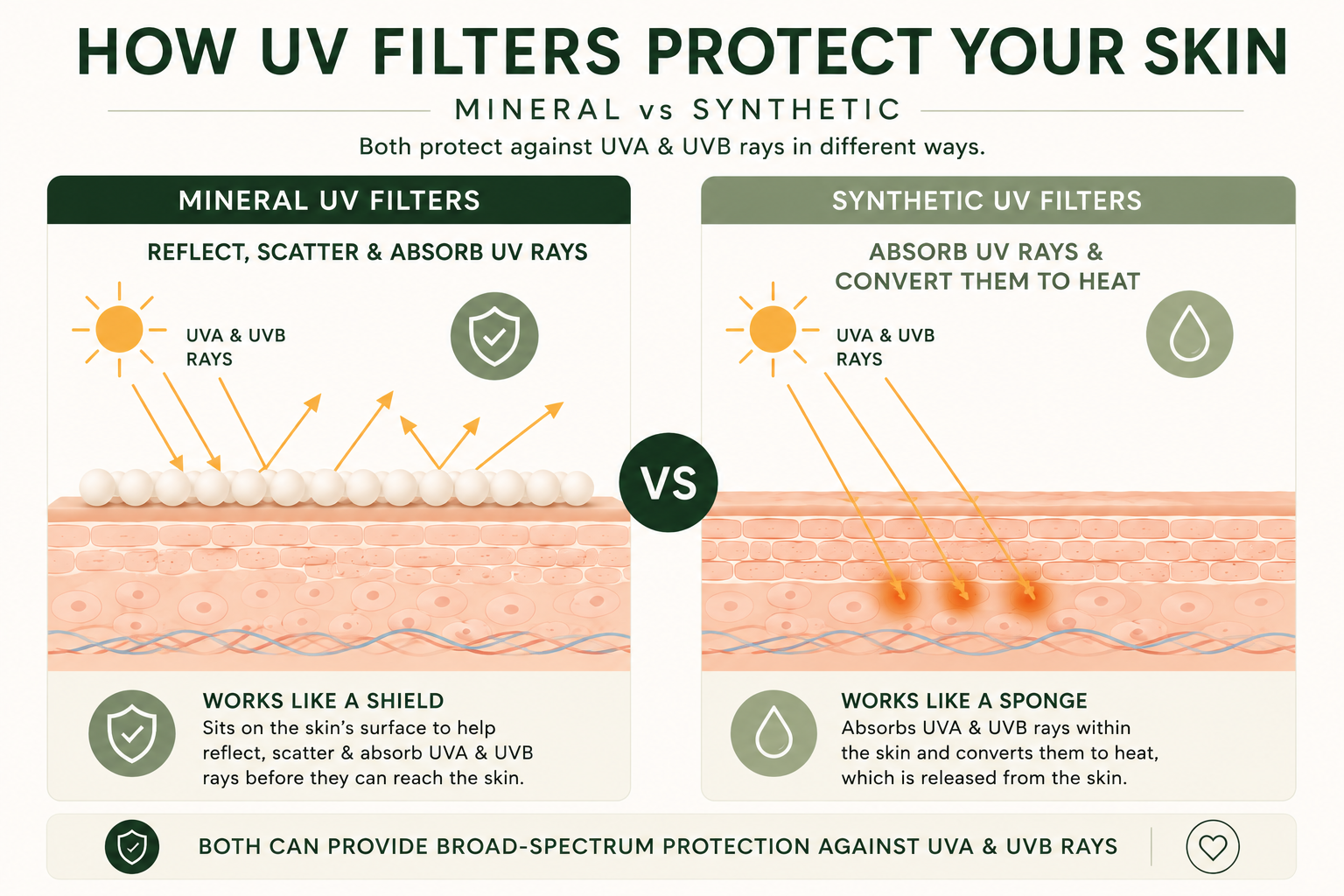
These minerals sit on the surface of the skin, where they help reflect, scatter and absorb ultraviolet radiation before it can damage skin cells.
Freedom Mineral Suncream uses a combination of non-nano zinc oxide and non-nano titanium dioxide to provide broad-spectrum UVA and UVB protection.
What Is Synthetic Sun Cream?
Synthetic sun creams use laboratory-produced UV filters that absorb ultraviolet radiation and convert it into tiny amounts of heat before it reaches deeper layers of the skin.
Some of the most common synthetic UV filters include:
Oxybenzone (Benzophenone-3)
Octinoxate (Ethylhexyl Methoxycinnamate)
Octocrylene
Homosalate
Avobenzone
Octisalate
These ingredients have been used in sunscreens for many years and continue to be reviewed as new scientific evidence emerges.
Several synthetic UV filters, including oxybenzone (benzophenone-3), octinoxate (ethylhexyl methoxycinnamate), homosalate and octocrylene, have attracted increasing scientific attention. Studies have investigated whether some of these ingredients can be absorbed through the skin, interact with the body's hormone (endocrine) system or persist in the environment after washing off into rivers and seas.
Some laboratory and animal studies have identified endocrine-disrupting activity in certain UV filters, while environmental research has linked several ingredients to harmful effects on coral reefs and other marine life. This growing body of research has led some countries and regions to restrict the use of particular UV filters and has encouraged many consumers to choose mineral alternatives as part of a precautionary approach.
Mineral vs Synthetic UV Filters
Both mineral and synthetic sun creams are designed to protect against the sun's harmful UV rays.
The difference lies in the ingredients they use.
Mineral sun creams rely on zinc oxide and titanium dioxide, while synthetic sun creams contain laboratory-produced UV filters.
Many people choose mineral sun creams because they:
Prefer naturally derived mineral UV filters.
Wish to avoid certain synthetic UV filters.
Have sensitive skin.
Want a more precautionary approach to skincare.
Are concerned about environmental impacts.
At The Green Woman, we believe that where an effective mineral alternative exists, it makes sense to choose it.
Mineral vs Synthetic Sun Cream at a Glance
| Mineral Sun Cream | Synthetic Sun Cream |
|---|---|
| Uses zinc oxide and titanium dioxide as UV filters | Uses laboratory-produced UV filters such as oxybenzone, octinoxate, octocrylene, homosalate and avobenzone |
| Provides broad-spectrum UVA and UVB protection | Provides broad-spectrum UVA and UVB protection |
| Non-nano options are available | Does not use mineral UV filters |
| Often chosen by people following a precautionary approach | Contains synthetic UV filters that continue to be studied for their effects on human health and the environment |
| Suitable for sensitive skin | Some people with sensitive skin prefer to avoid certain synthetic UV filters |
| Preferred by many consumers looking for simpler ingredient lists | Widely available in conventional sunscreens |
| Often selected by people wishing to reduce their exposure to synthetic UV filters | May contain UV filters that have attracted scientific attention for endocrine activity or environmental persistence |
Both mineral and synthetic sunscreens are designed to protect against harmful UV rays. At The Green Woman, we've chosen non-nano zinc oxide and non-nano titanium dioxide because we believe that where an effective mineral alternative exists, taking a precautionary approach is a sensible choice for both people and the planet.
Nano vs Non-Nano: What's The Difference?
One of the biggest questions people ask about mineral sunscreens is whether the mineral filters are nano or non-nano.
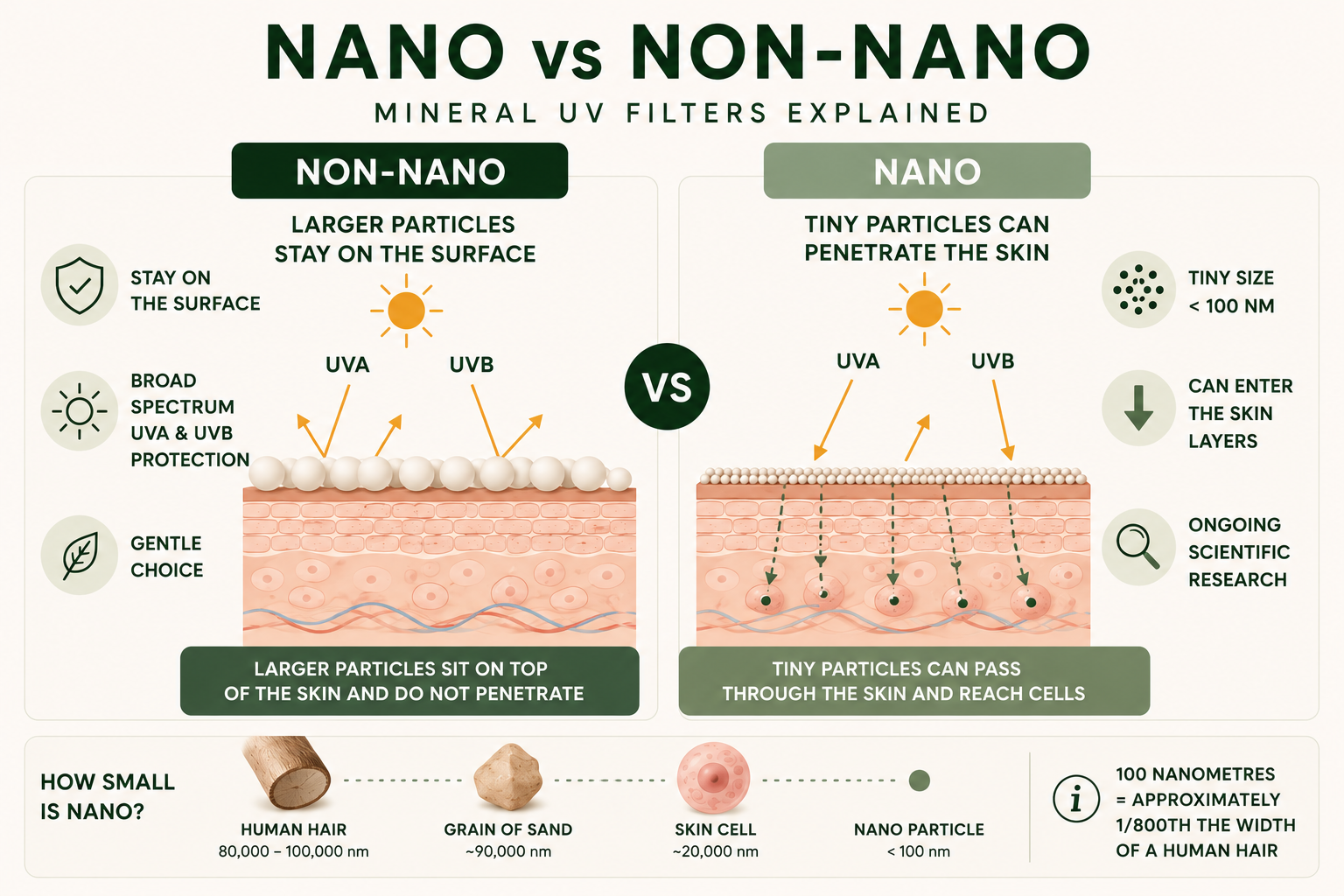
A nanoparticle measures less than 100 nanometres across. To put that into perspective, a human hair is around 80,000 to 100,000 nanometres wide.
Manufacturers began producing nano zinc oxide and nano titanium dioxide because the smaller particles spread more easily across the skin and reduce the white appearance that traditional mineral sunscreens sometimes leave behind.
However, their extremely small size has also raised questions about whether nanoparticles may behave differently from larger particles.
Scientists continue to investigate whether nanoparticles could penetrate damaged skin, enter individual cells or interact differently with the body and the environment.
Current safety assessments have concluded that approved nano mineral UV filters are safe when used as intended. However, because research continues to develop, many consumers choose to take a precautionary approach.
Non-nano zinc oxide and non-nano titanium dioxide use larger particles that are designed to remain on the surface of the skin, where they provide broad-spectrum UV protection without being engineered at the nanoscale.
Why We Choose Non-Nano Mineral UV Filters
Freedom Mineral Suncream is made with carefully selected mineral filters and certified organic botanical ingredients.
Our active UV filters are:
Non-nano Zinc Oxide
Non-nano Titanium Dioxide
Alongside these, we use organic apricot kernel oil, organic jojoba oil, organic aloe vera and organic lavender essential oil to nourish and care for the skin.
We chose non-nano mineral filters because they provide effective broad-spectrum protection while remaining true to our philosophy of using simple, carefully selected ingredients wherever suitable alternatives exist.
Rather than relying on synthetic UV filters such as oxybenzone, octinoxate or octocrylene, we use mineral filters combined with certified organic plant ingredients to create a sun cream that's effective, water resistant and suitable for the whole family.
Making The Switch
More people are beginning to question the ingredients in everyday products, including sunscreens.
Choosing a mineral sun cream is one simple way to reduce your exposure to synthetic UV filters while still enjoying effective sun protection.
Combined with sensible sun habits such as building exposure gradually, seeking shade during the strongest part of the day and avoiding sunburn, mineral sun creams offer a practical, precautionary approach to protecting both your skin and the environment.
Looking For A Natural Alternative?
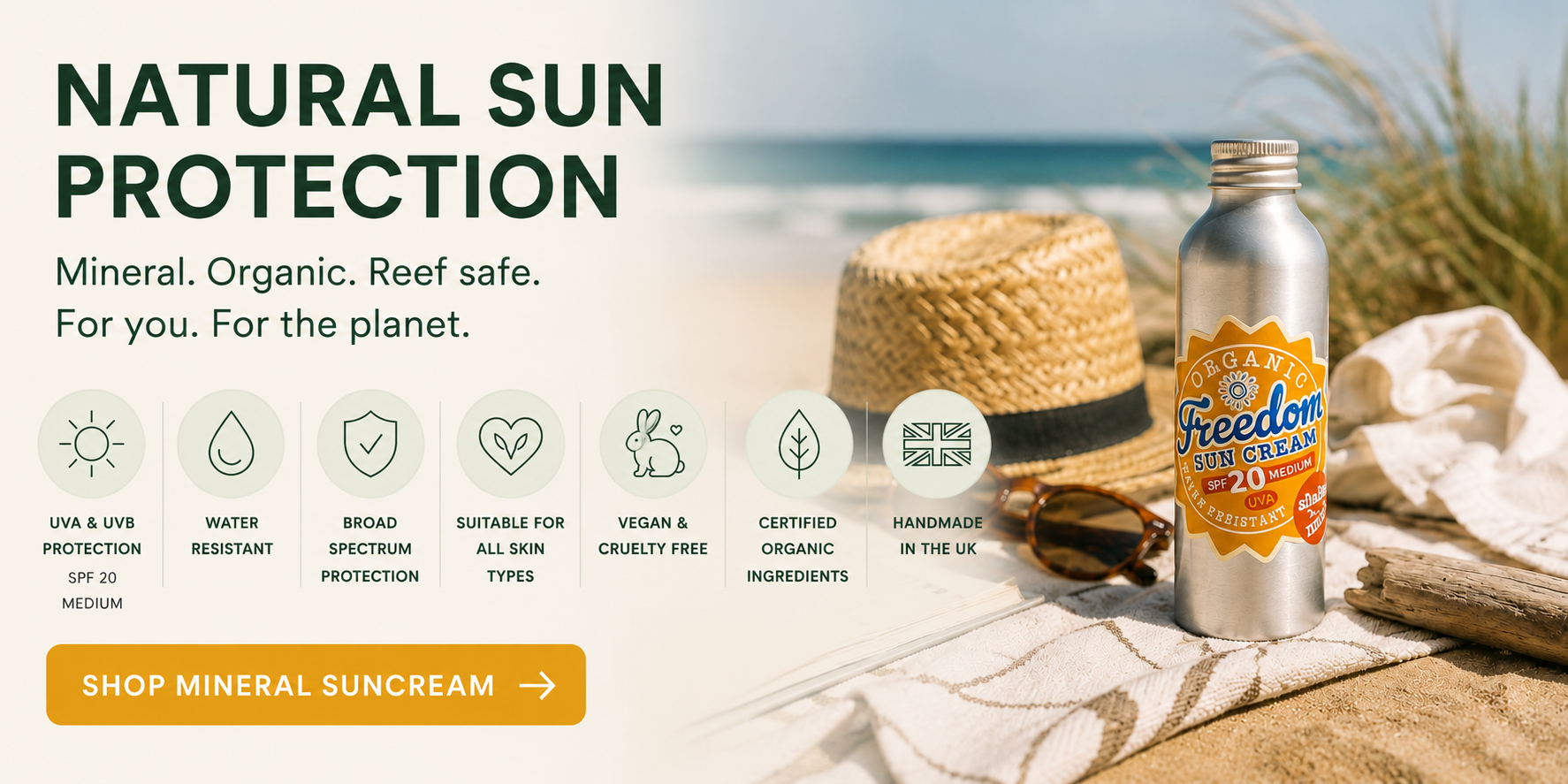
If you're ready to switch, Freedom Mineral Suncream offers effective broad-spectrum protection using non-nano zinc oxide, non-nano titanium dioxide and certified organic plant ingredients.
It's handmade in the UK, vegan, cruelty free and formulated for people who want a simpler approach to sun care without relying on synthetic UV filters.
Because protecting your skin shouldn't mean compromising your values.
Frequently Asked Questions
What is the difference between mineral and synthetic sun cream?
Mineral sun creams use zinc oxide and titanium dioxide as their UV filters, while synthetic sun creams use laboratory-produced ingredients such as oxybenzone, octinoxate and octocrylene.
What does non-nano mean?
Non-nano means the mineral particles are larger than 100 nanometres. They are designed to remain on the surface of the skin while providing broad-spectrum UV protection.
Why does Freedom Mineral Suncream use non-nano mineral filters?
We believe effective, non-nano mineral UV filters provide an excellent alternative to synthetic UV filters while supporting our precautionary approach to skincare.
Does Freedom Mineral Suncream contain zinc oxide?
Yes. Freedom Mineral Suncream contains both non-nano zinc oxide and non-nano titanium dioxide, together with certified organic botanical ingredients.
Why do people choose mineral sun cream?
Many people choose mineral sun creams because they prefer naturally derived mineral UV filters, wish to avoid certain synthetic UV filters and want a simpler, more environmentally conscious approach to sun protection.