
A Natural Approach to Sun Exposure: Beyond Sun Cream

Sun care is often reduced to a single question: "What sun cream should I use?"
But a truly balanced approach to sun exposure starts much earlier than applying a product.
Sunlight is essential for human health. It helps regulate our sleep-wake cycle, supports vitamin D production, influences mood, and plays a role in many biological processes. Yet too much sun, particularly sunburn, can damage the skin and increase the risk of skin cancer.
The good news is that sun care doesn't have to be an all-or-nothing choice between avoiding the sun entirely and spending hours baking on the beach. By understanding how sunlight affects the body and adopting sensible habits, it's possible to enjoy the benefits of sunshine while reducing the risks.
In this guide:
- Why we need sunlight
- UVA vs UVB
- Morning sunlight explained
- What causes sunburn?
- How to protect your skin naturally
- Choosing a mineral sun cream
Why Do We Need Sunlight?
For most of human history, people spent a large proportion of their day outdoors. Our bodies evolved with regular exposure to natural daylight, and many important biological processes still depend on it.
Sunlight helps:
- Support the production of vitamin D
- Regulate circadian rhythms and sleep
- Influence mood and mental wellbeing
- Support healthy immune function
- Help regulate hormone production
Vitamin D is perhaps the most well-known benefit of sunlight. When ultraviolet B (UVB) rays reach the skin, they trigger the production of vitamin D, which plays an important role in bone health, immune function, and overall wellbeing.
In countries such as the UK, vitamin D levels can fall during autumn and winter when sunlight is limited, making sensible summer sun exposure particularly important.
Not All Sunlight Is The Same
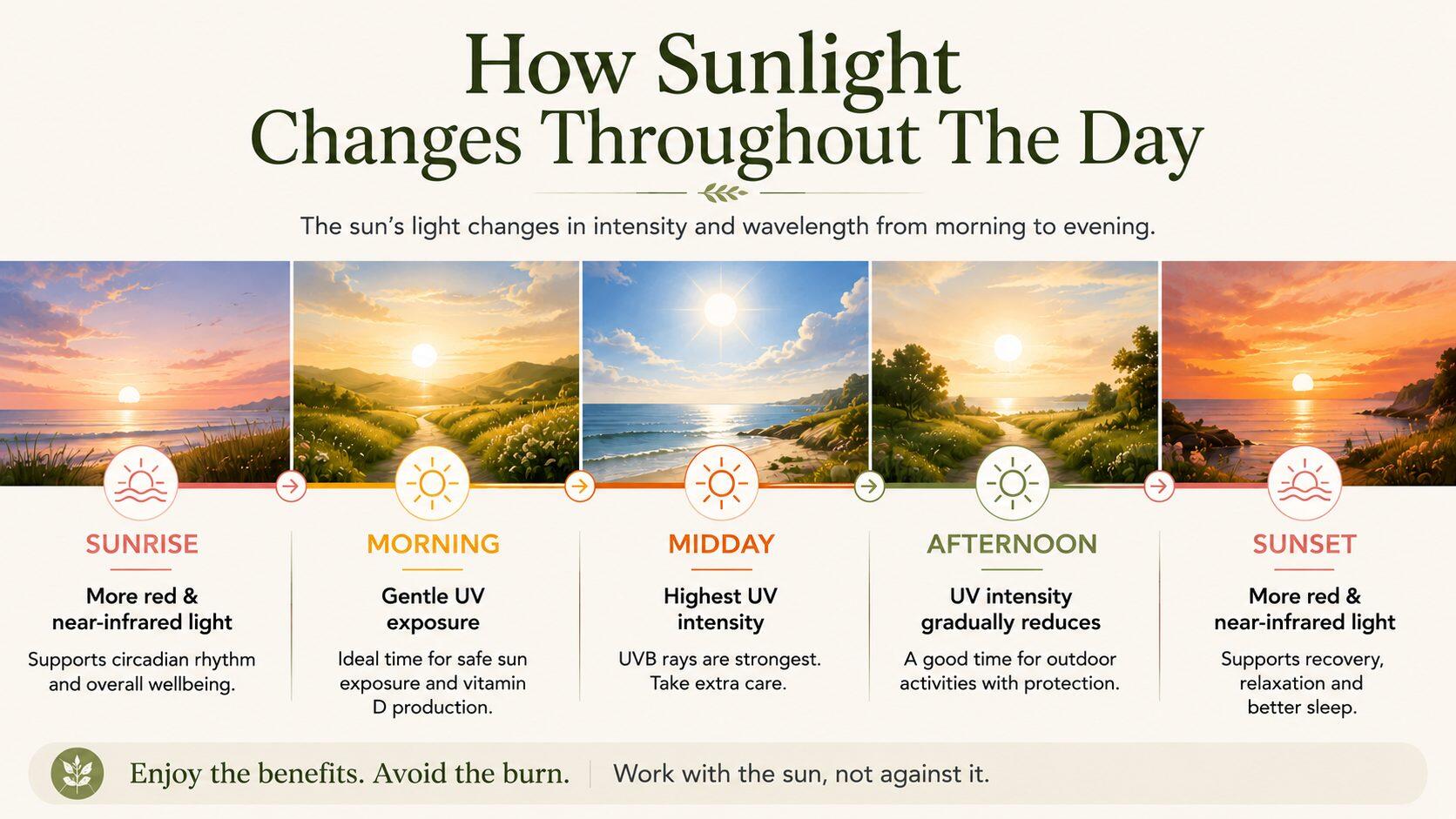
One fascinating aspect of sunlight is that its composition changes throughout the day.
Early in the morning and late in the afternoon, sunlight contains a higher proportion of longer wavelengths such as red and near-infrared light. These wavelengths penetrate deeper into tissues and are increasingly being studied for their role in supporting cellular health and repair.
As the sun rises higher in the sky, ultraviolet light becomes more intense.
The two types of ultraviolet radiation most often discussed are:
UVA
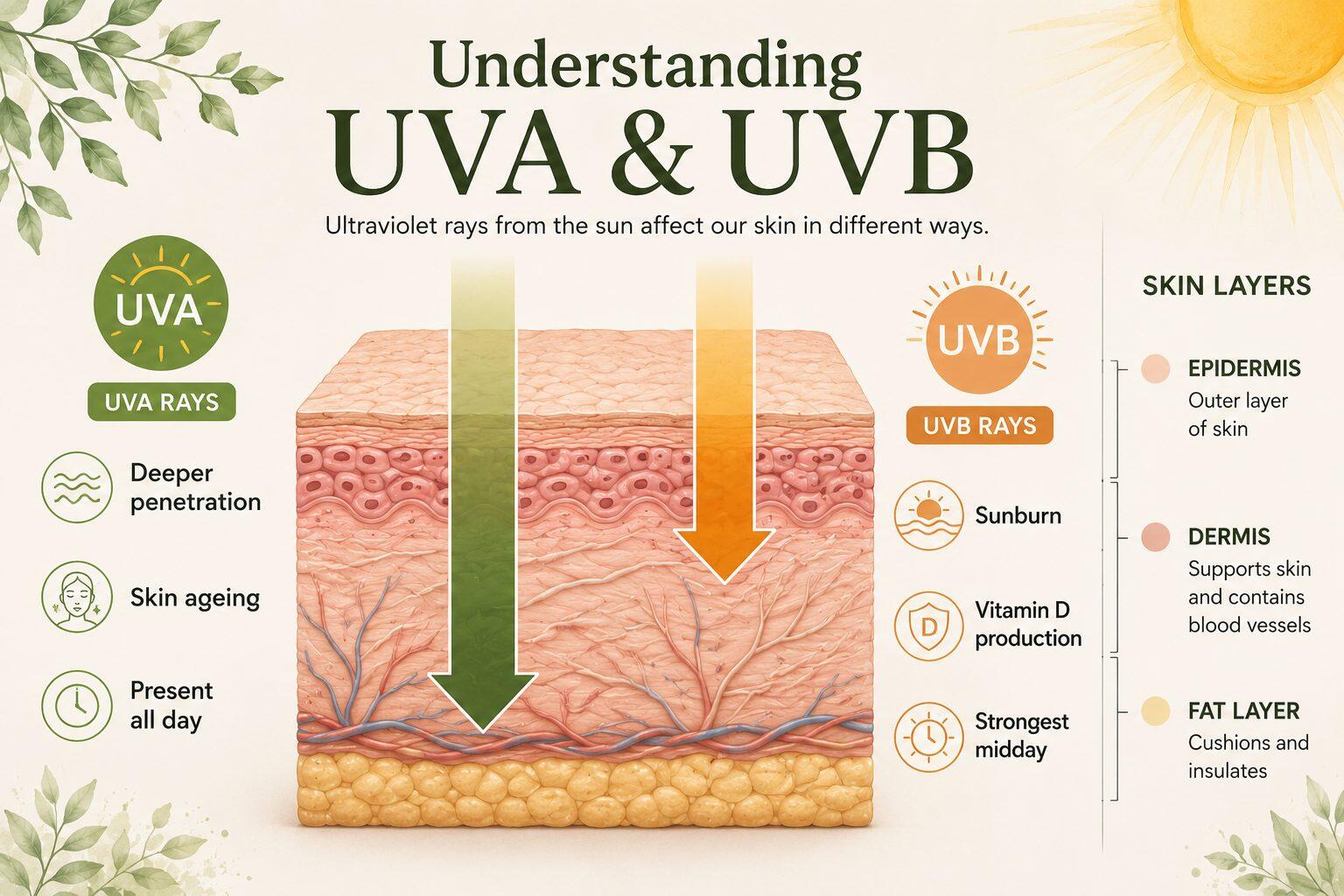
UVA rays make up the majority of ultraviolet radiation reaching the Earth's surface.
They penetrate deeper into the skin and are associated with:
- Premature skin ageing
- Wrinkles and loss of elasticity
- Pigmentation changes
- Long-term skin damage
UVB
UVB rays are more energetic but do not penetrate as deeply.
They are responsible for:
- Vitamin D production
- Most sunburn
- Direct DNA damage to skin cells
UVB levels are generally highest around midday, particularly during summer.
Can Morning Sunlight Help Prepare The Skin?
There is growing scientific interest in how exposure to morning sunlight may influence the body's response to later sun exposure.
Researchers have observed that red and near-infrared wavelengths found in early morning sunlight may help support the skin's natural repair mechanisms and cellular resilience.
Some studies suggest these wavelengths can:
- Support mitochondrial function
- Reduce oxidative stress
- Help the body manage inflammation
- Promote cellular repair processes
While this area of research is promising, it is important to note that morning sunlight is not a substitute for sensible sun protection and does not make people immune to sunburn.
However, many experts believe that regular exposure to natural daylight throughout the day may help support healthier adaptation to sunlight than spending most of the year indoors and then suddenly exposing skin to intense midday sun.
Why Sunburn Matters
Sunburn is not simply a cosmetic issue.
A sunburn occurs when ultraviolet radiation causes damage to skin cells faster than the body can repair it.
Signs of sunburn include:
- Redness
- Pain or tenderness
- Swelling
- Peeling skin
- Blistering in severe cases
When skin cells are damaged by ultraviolet radiation, the body launches an inflammatory response. Repeated episodes of sunburn increase cumulative DNA damage within skin cells and are associated with a higher risk of skin cancers later in life.
For this reason, the goal of sensible sun care is not necessarily to avoid all sunlight.
The goal is to avoid burning.
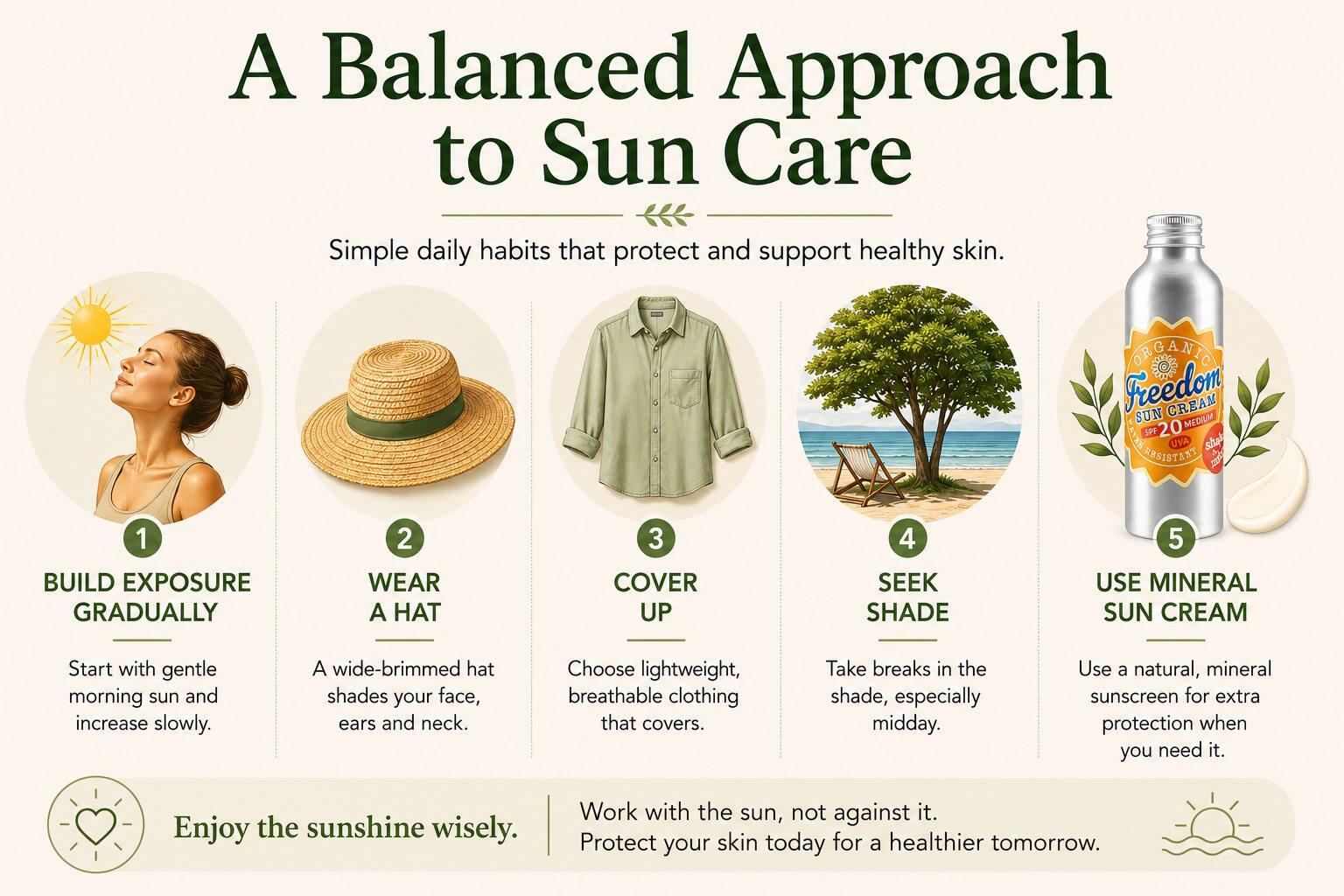
Building Sun Exposure Gradually
Just as muscles adapt gradually to exercise, skin can adapt to sunlight over time.
Many dermatologists and sun researchers recommend gradually increasing sun exposure in spring and early summer rather than suddenly spending long periods in intense sunshine after months indoors.
Simple approaches include:
- Spending short periods outdoors each day
- Building exposure gradually
- Avoiding prolonged midday exposure when unaccustomed
- Seeking shade before skin becomes red
Everyone's skin is different.
People with fair skin typically burn much more quickly than those with darker skin tones and may need additional precautions.
Clothing And Shade: Nature's Original Sun Protection
Long before sun creams existed, people used clothing, hats and shelter to protect themselves from excessive sun exposure.
These remain some of the most effective forms of protection.
Helpful strategies include:
- Wearing a wide-brimmed hat
- Choosing lightweight long sleeves
- Using sunglasses with UV protection
- Seeking natural shade during peak sun hours
- Using umbrellas or sun shelters at the beach
Unlike sun creams, clothing cannot be washed off, rubbed away, or missed during application.
For young children especially, clothing and shade often provide the most reliable protection.
Where Does Mineral Sun Cream Fit In?
Sun cream can play an important role in a balanced sun care routine, particularly during prolonged outdoor activities.
Mineral sun creams use ingredients such as zinc oxide to create a protective barrier on the skin's surface.
Many people choose mineral sun creams because they:
- Provide broad-spectrum protection
- Use simple formulations
- Avoid certain synthetic UV filters
- Are often preferred by those seeking lower-tox alternatives
For many families, mineral sun cream works best when combined with:
- Sensible exposure
- Shade
- Protective clothing
- Avoiding burning
Rather than viewing sun cream as permission to stay in intense sunshine indefinitely, it can be seen as one part of a wider sun care strategy.
A Balanced Approach To Sun Care
Sunlight is not something to fear, but it is something to respect.
A healthy relationship with the sun involves understanding both its benefits and its risks. Spending time outdoors, enjoying natural daylight, building exposure gradually and avoiding sunburn can all help you gain the benefits of sunshine while reducing the potential for skin damage.
Rather than relying on a single solution, a balanced approach combines sensible sun habits, protective clothing, shade when needed and appropriate sun protection for prolonged exposure.
Looking For Natural Alternatives?
At The Green Woman, we believe sun care is about more than simply applying a product. Building sensible sun habits, spending time outdoors, seeking shade when needed, and avoiding burning all play an important role.
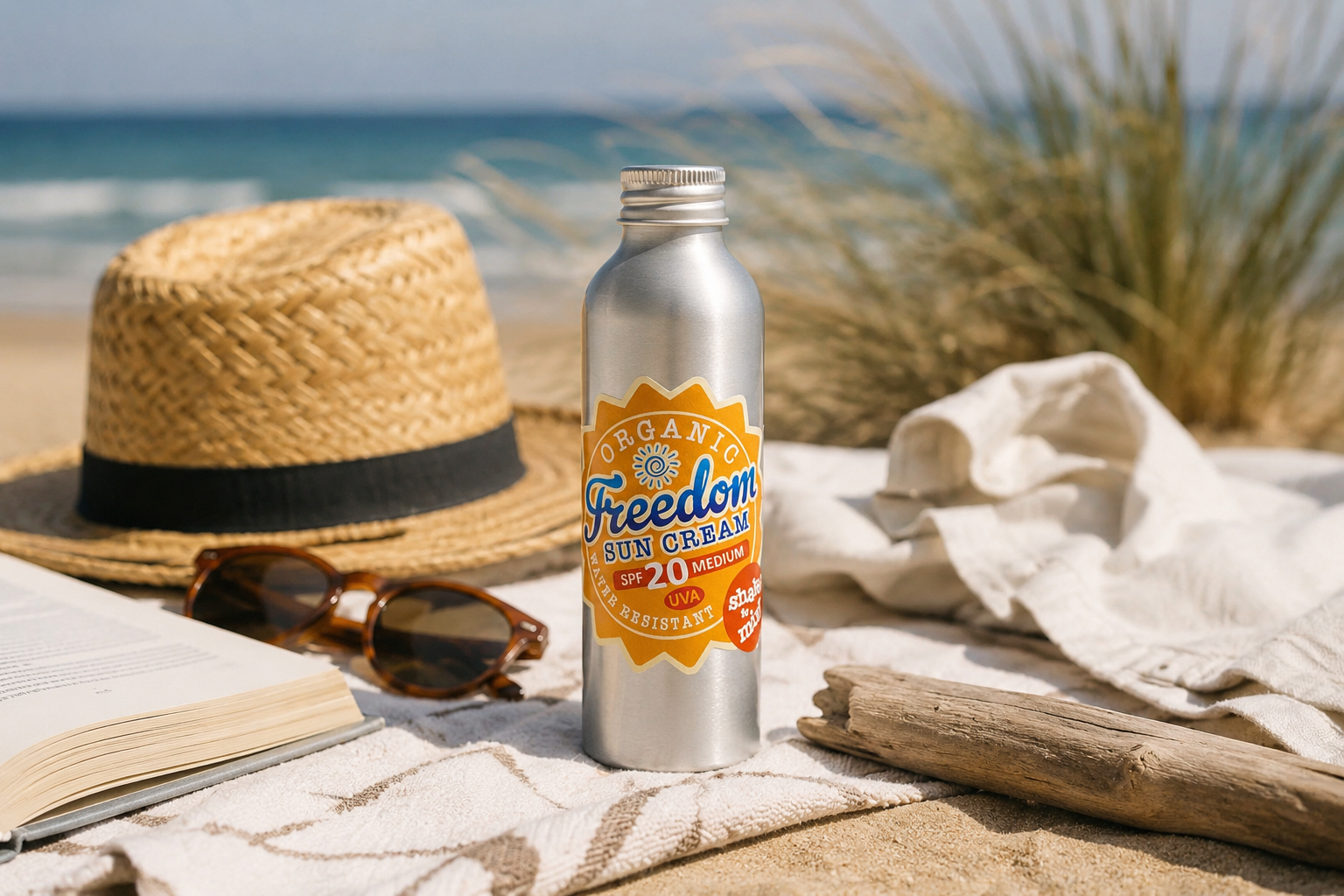
For times when additional protection is needed, our Freedom Suncream combines non-nano mineral filters with carefully selected ingredients to provide broad-spectrum protection in a simple, effective formula.
Unlike many conventional sunscreens, Freedom Suncream uses mineral UV filters alongside certified organic ingredients to help protect and nourish the skin.
Explore Freedom Mineral Suncream →
Frequently Asked Questions
Is morning sunlight better for your skin?
Morning sunlight is generally gentler than the stronger sunlight experienced around midday because UV levels are typically lower. Some researchers suggest that spending time outdoors in the morning may help your body adapt gradually to increasing sunlight throughout the day, while also supporting your natural circadian rhythm. Although more research is needed into the effects of different wavelengths of light on skin resilience, building sun exposure gradually is generally considered preferable to sudden, prolonged exposure during peak UV hours.
How long should you stay in the sun?
The amount of time you can safely spend in the sun varies depending on your skin type, the time of day, the season and the UV Index. Fairer skin burns more quickly than darker skin. The aim should be to enjoy enough sunlight to gain its benefits without allowing your skin to become pink or burn. If you plan to stay outside for longer, use a combination of shade, protective clothing, a hat and appropriate sun protection.
Does mineral sun cream block vitamin D?
Current research suggests that using mineral sun cream in normal, everyday conditions is unlikely to prevent your body from producing vitamin D. In practice, most people do not apply sunscreen perfectly or cover every area of exposed skin, allowing some sunlight to reach the skin. If you spend very little time outdoors or have concerns about your vitamin D levels, speak to a healthcare professional.
What's the difference between UVA and UVB?
Both UVA and UVB are types of ultraviolet (UV) radiation from the sun, but they affect the skin differently. UVA rays penetrate deeper into the skin and are associated with premature skin ageing and long-term sun damage. UVB rays mainly affect the outer layers of the skin and are responsible for sunburn, while also playing an important role in vitamin D production. Protecting your skin means understanding both types of UV exposure and avoiding burning rather than avoiding sunlight altogether.
Is zinc oxide safe?
Zinc oxide has a long history of use in mineral sun creams and is widely recognised as an effective UV filter. Non-nano zinc oxide works by sitting on the surface of the skin and reflecting and scattering ultraviolet rays rather than being absorbed into the body. It is generally considered safe for topical use and is approved for use in sunscreens in many countries. Many people choose mineral sun creams containing non-nano zinc oxide because they prefer a simpler formulation and wish to avoid certain synthetic UV filters.
Can you still get sunburn on a cloudy day?
Yes. Although clouds can reduce the amount of visible sunlight, ultraviolet (UV) rays can still pass through cloud cover. It's possible to get sunburn on cloudy days, particularly during spring and summer when the UV Index is high. Rather than judging the risk by temperature or sunshine alone, it's a good idea to check the daily UV Index and take sensible precautions whenever UV levels are elevated.